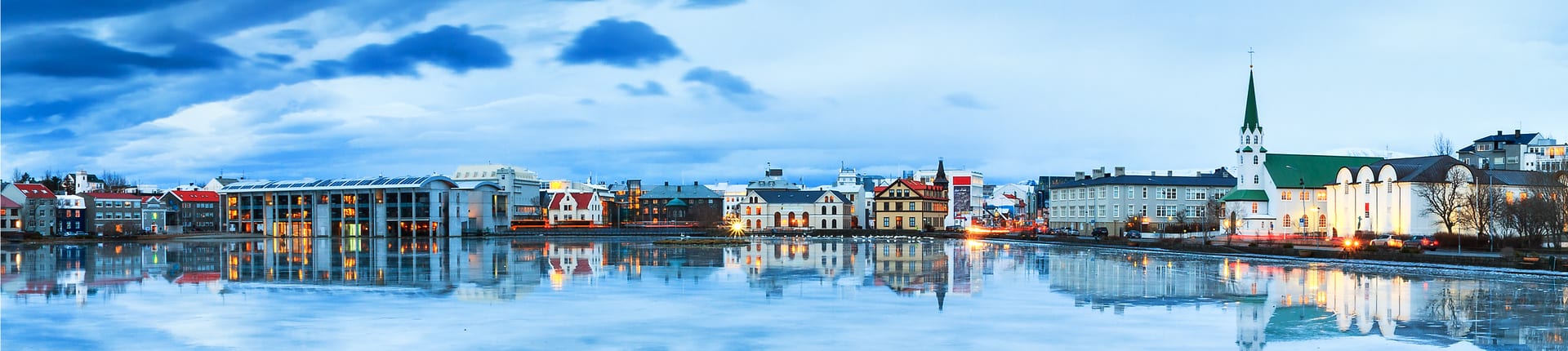
Iceland, an island nation located in northern Europe, is situated between Scandinavia and Greenland in the North Atlantic Ocean, which is quite remote from other landmasses. Reykjavik serves as the capital and largest city of Iceland.
With a population of approximately 370,000, most of the inhabitants are of Icelandic origin. Minorities mainly consist of immigrants from various European countries. People in Iceland predominantly live in the southern regions and coastal cities.
The official currency in Iceland is the Icelandic Krona, and traffic moves on the right side of the road. While Icelandic is the primary language, many residents also speak Danish, German, English, and other Northern dialects. Iceland was first discovered by settlers from Norway in 861 AD, followed by Vikings, Danes, and English who came and settled in the subsequent years. Influenced politically and culturally by these nations, Iceland still bears the marks of different cultures in various aspects of life.
Iceland holds the unique distinction of being the only NATO member without a standing army. It is also recognized as a significant financial center, although it has partially lost this status in recent years due to economic crises. Nonetheless, Icelandic financial institutions still have a considerable presence in Europe.
Much of Iceland consists of volcanic landscapes, and the country is home to over 200 active volcanoes. One of the most famous is Hekla Volcano, which stands at 1,490 meters.
Iceland has a predominantly cold climate throughout the year, with snowfall occurring most of the year except during a short summer period. However, the influence of the Gulf Stream, a warm ocean current, significantly moderates the climate in the region. While winter temperatures can drop below freezing, summer temperatures average around 10-11 degrees Celsius. In June, in the northern part of the country, the sun does not set for approximately 20 days.
Due to the cold climate, Iceland's vegetation primarily consists of tundras, with some forested areas in certain regions.
The Icelandic economy is generally based on the service sector, as the unfavorable climate conditions limit agriculture's significance. Nevertheless, being an island nation, fishing is a highly developed industry in Iceland. Tourism has also seen significant growth in recent years, with thermal facilities in the interior and colorful cities attracting tourists from various European countries.
Iceland lacks a railway system, and the most developed transportation options are air travel and maritime transport.